
Items
-

-
 The Future of Girls’ Education: Classroom, Curriculum and Culture2024The Girls’ Day School Trust , a unique family of 25 all girls’ schools across England and Wales, has recently released the GDST Insights Report and Framework. This report brings together some of the latest knowledge and research on delivering a world class education for girls. This is an important resource as it provides the tools to support girls to achieve their full potential, even when faced by inequalities and personal prejudice. This report was driven by the findings of the GDST’s landmark 2022 research that showed girls have amazing ambitions and are engaged and enthusiastic about the world.
 -
 The Gender Gap in Teen Experiences(2025) 2025American teens face a host of challenges these days – both inside and outside the classroom. A 2025 Pew Research Center survey of U.S. teens ages 13 to 17 finds that, while there is some common ground, many of the problems and pressure points teens are dealing with differ significantly for boys and girls. In addition, many teens see imbalances in how boys and girls are experiencing school and how they’re performing academically.
 -
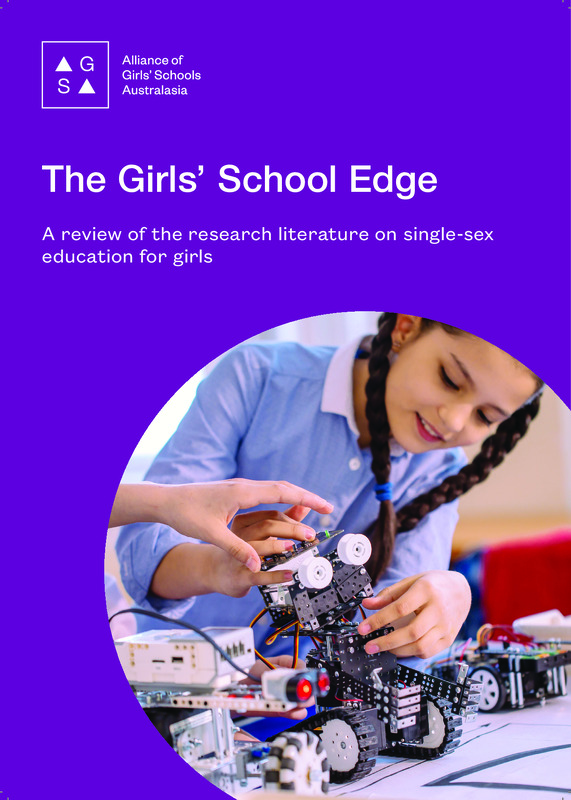 The Girls' School Edge: A Review of the Literature on Single-Sex Education for Girls(2021) 2021Choosing the right school for your daughter is one of the most difficult decisions to make, and regardless of her age or stage of schooling the stakes are high. Debate on the choice between single-sex and co-educational schools often focuses on academic outcomes, ignoring the many other equally important factors that contribute to a good education. Countless studies have shown that a girl’s school experience can influence her social and emotional wellbeing as well as her academic outcomes. Making the right choice for your daughter’s education doesn’t just benefit her while she’s attending school, it can shape her future choices and set her up for life success. Navigating the sea of education information, opinions and anecdotal experiences can be intimidating. We've reviewed the wealth of research from around the world and compiled it in this report to help you make an informed decision on what’s best for your daughter. It covers important areas such as academic outcomes, wellbeing and belonging, and also some less obvious considerations such as participation in sport and STEM (Science, Technology, Engineering and Maths) subjects, confidence and gender stereotyping.
 -
-
 The Impact of Female Role Models Leading a Group Mentoring Program to Promote STEM Vocations among Young GirlsMariluz Guenaga, Andoni Eguíluz, Pablo Garaizar and Ander Mimenza (2022) 2022Synopsis: From an early age, girls disregard studies related to science, technology, engineering, or mathematics (STEM), and this means that a gender gap begins during secondary education and continues to increase over time. Multiple causes have been identified for this phenomenon in the literature, and numerous initiatives are being carried out to reverse this situation. In this paper, we analyze the impact that a group mentoring initiative led by a female STEM role model had on the young people who participated and whether the impact was different based on their sex. We analyzed how these mentoring sessions affected their attitudes towards technology, mathematical self-efficacy, gender stereotypes, science and technology references, and career vocations. To this end, 303 students between the ages of 10 and 12 years old from 10 schools in Spain participated in the six sessions comprising the program and completed a series of questionnaires before and after participating. The results show that the program had an impact on the students’ attitudes towards technology, increased the number of female STEM references they knew, and improved their opinions of vocations and professions related to science and technology. The impact was greater among girls, although in aspects such as attitudes towards technology, the female participants still demonstrated lower values than boys. The program did not improve the stereotypes that the young participants had about mathematical self-efficacy, which was also always lower among girls. We conclude that the lack of STEM vocations among girls is rooted in multiple social, educational, and personal aspects that need to be addressed from a very early age and that should involve multiple agents.
 -
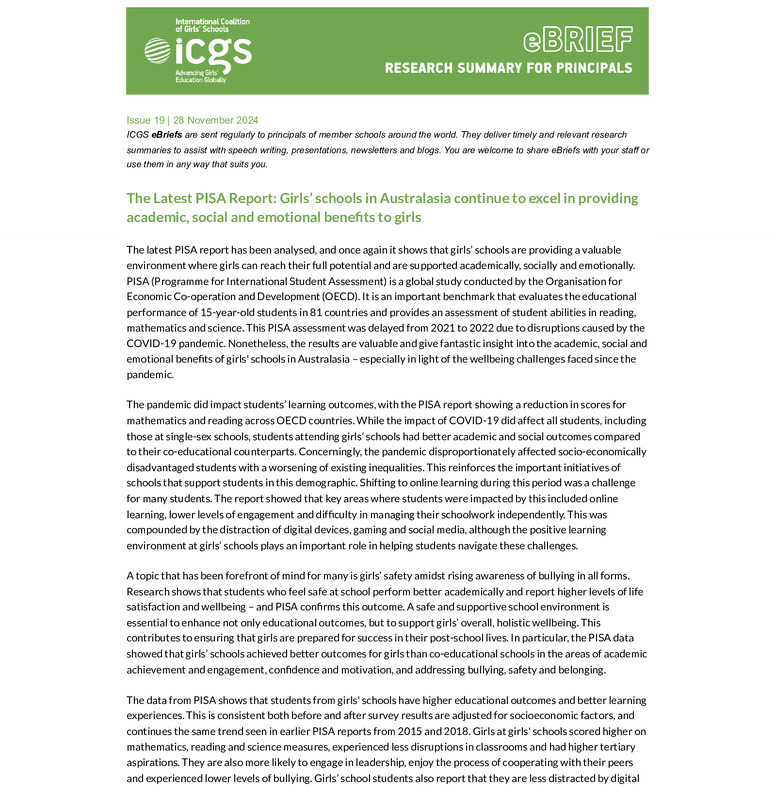 The Latest PISA Report: Girls’ schools in Australasia continue to excel in providing academic, social and emotional benefits to girls(2024) 2024The latest PISA report has been analysed, and once again it shows that girls’ schools are providing a valuable environment where girls can reach their full potential and are supported academically, socially and emotionally. PISA (Programme for International Student Assessment) is a global study conducted by the Organisation for Economic Co-operation and Development (OECD). It is an important benchmark that evaluates the educational performance of 15-year-old students in 81 countries and provides an assessment of student abilities in reading, mathematics and science. This PISA assessment was delayed from 2021 to 2022 due to disruptions caused by the COVID-19 pandemic. Nonetheless, the results are valuable and give fantastic insight into the academic, social and emotional bene ts of girls' schools in Australasia – especially in light of the wellbeing challenges faced since the pandemic. In this brief, we share the insights from the PISA data.
 -
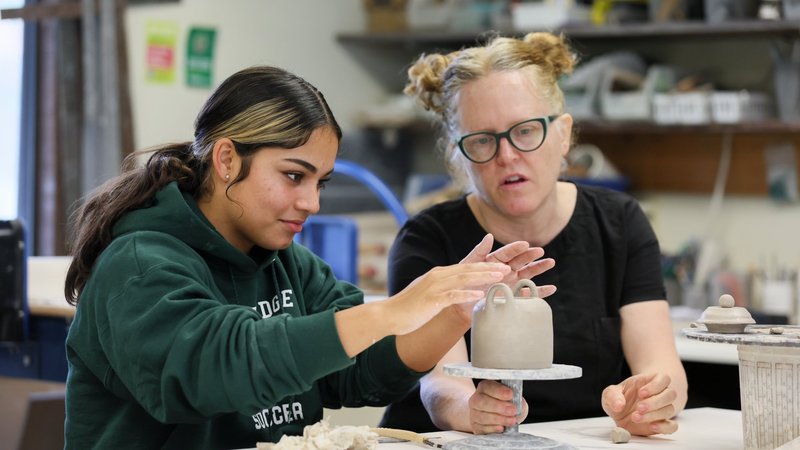 The Positive Effects of the Girls’ School Environment: An Analysis of PISA Data2023This ICGS-commissioned study dives into the experiences of girls participating in the Programme for International Student Assessment (PISA). The report compared data from girls enrolled in coeducational schools and girls’ schools in 12 participating countries. Of the 60,144 respondents, 46,352 (75%) of the participating schools were coed, while 13,792 (23%) were girls’ schools. Findings trended overwhelmingly positive across a number of measures for those students attending girls’ schools, and the key differences are highlighted in this Executive Summary.
 -
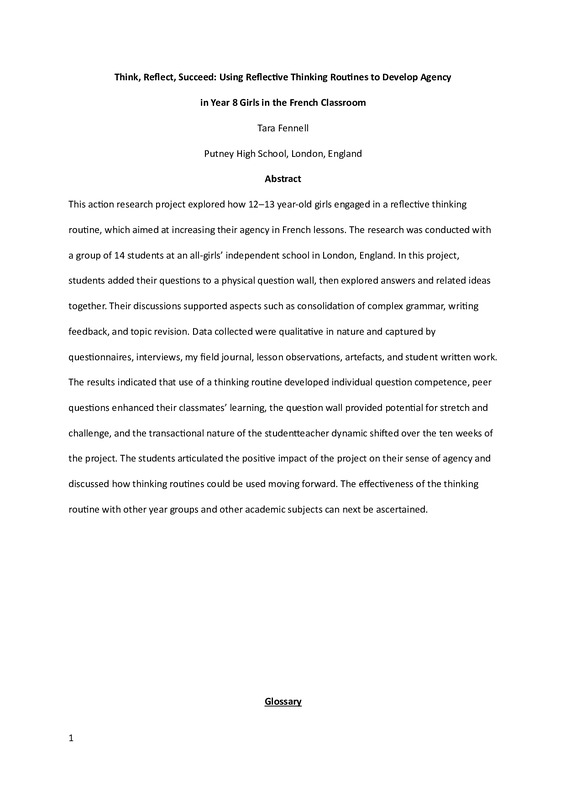 Think, Reflect, Succeed: Using Reflective Thinking Routines to Develop Agency in Year 8 Girls in the French ClassroomTara Fennell (2025) 2025This action research project explored how 12–13 year-old girls engaged in a reflective thinking routine, which aimed at increasing their agency in French lessons. The research was conducted with a group of 14 students at an all-girls independent school in London, England. In this project, students added their questions to a physical question wall, then explored answers and related ideas together. Their discussions supported aspects such as consolidation of complex grammar, writing feedback, and topic revision. Data collected were qualitative in nature and captured by questionnaires, interviews, my field journal, lesson observations, artefacts, and student written work. The results indicated that use of a thinking routine developed individual question competence, peer questions enhanced their classmates’ learning, the question wall provided potential for stretch and challenge, and the transactional nature of the student-teacher dynamic shifted over the ten weeks of the project. The students articulated the positive impact of the project on their sense of agency and discussed how thinking routines could be used moving forward. The effectiveness of the thinking routine with other year groups and other academic subjects can next be ascertained.
 -
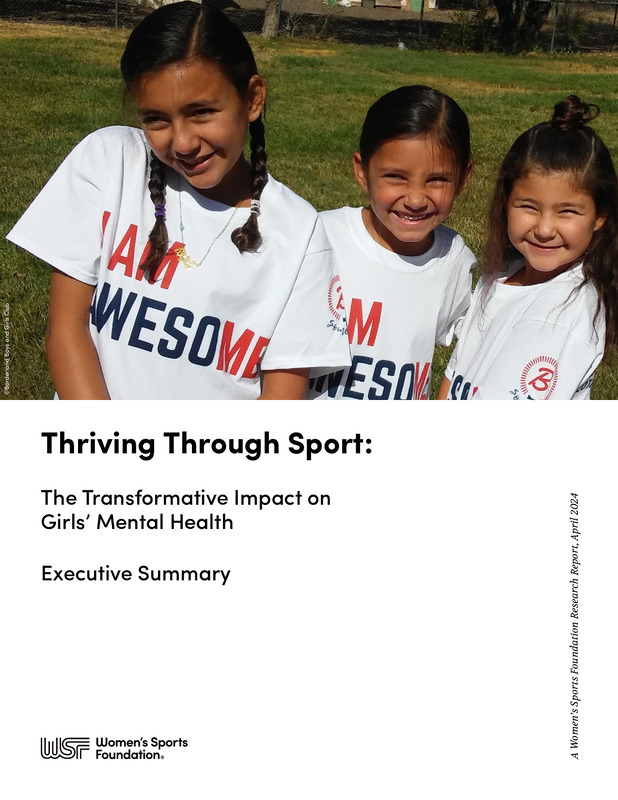 Thriving Through Sport: The Transformative Impact on Mental Health(2024) 2024Today’s youth are at an increasingly high risk of mental health disorders (Office of the Surgeon General, 2021). The ongoing mental health crisis of children and adolescents was only worsened by the confluence of issues brought about by the COVID-19 pandemic (Hiebert & Kortes-Miller, 2021) with continued growing rates of anxiety and depression as well as elevations in suicidal ideation and thoughts of self-harm among today’s youth (Reinert et al., 2021). Given the popularity and reach of sport, along with promising research on positive developmental impacts, The Women’s Sport Foundation (WSF) commissioned the Thriving Through Sport: The Transformative Impact on Girls’ Mental Health report to examine the relationship between sport participation and mental health in adolescent girls.
 -
 Understanding and supporting neurodiverse girls in mainstream schoolsMilner, V. L., Mohamed, L., & Happ, F 2025“Beyond the stereotype”: Neurodivergent students’ experience and peer and teacher understanding of neurodiversity in a mainstream girls’ school. Neurodiversity , 3. https://doi.org/10.1177/27546330251326056 Overview Researchers from King’s College London studied the experiences of neurodivergent girls (primarily those with autism and ADHD) in a selective all-girls’ school. Their findings shed light on how schools can better support these students. Key Findings Misunderstanding & Assumptions - 93% of students said people don’t understand what it means to be neurodiverse. - Common myths: excelling in one area = excelling in all areas; autism/ADHD are the only forms of neurodivergence. Stigma & Disclosure - Students feared being labeled, stereotyped, or bullied if they disclosed a diagnosis. - Teachers viewed disclosure as essential for adapting instruction, but worried about bias or misinterpretation. Camouflaging & Pressure - Many girls described “performing” to fit in—masking differences at high emotional cost, leading to exhaustion and stress. The Double Empathy Problem - Neurodivergent students felt misunderstood. - Teachers and peers lacked confidence in their understanding. - This mutual gap deepened stigma and isolation. Implications for Schools - Whole-School Education: Incorporate assemblies or lessons to reduce stigma and myths. - Safe Spaces & Trusted Staff: Provide quiet areas and support networks for overwhelmed students. - Inclusive Teaching: Use clear instructions, adapt communication, and show patience with different learning needs. - Amplify Student Voices: Involve neurodiverse girls directly in shaping strategies. - Universal Supports: Offer strategies for all students, including high-achieving but unidentified girls with neurodivergent traits.
 -
Understanding the connection between peer relationships and mental health concerns for girls: Bullying, victimisation and internalisationICGS 2025New research that explores the connection between peer relationships and mental health concerns has been released by the Manchester Institute of Education, University of Manchester. Focussing on 176 schools from Greater Manchester, England, as a case study this article provides new understandings of the longitudinal relationships between peer relationships and mental health concerns, especially the differences between experiences based on gender. This includes a focus on the benefits of friendship and social support, and the effect of bullying victimisation and internalising of symptoms. These research findings are important for educators given the increasingly significant role of peer relationships for students as they reach adolescence, begin to seek greater levels of independence, and develop their own identities. The data for this article was drawn from #BeeWell, which is a study that follows “young people attending schools across Greater Manchester”. It includes an annual online survey that the authors combined with data from local authorities and school records (Cheng et al., 2025, pp. 5-6). The case study is based exclusively on schools in Greater Manchester, England. This includes schools with “higher levels of socio-economic deprivation and greater ethnic diversity than is seen across England”, which should be considered when assessing the applicability of the study results to other locations (Cheng et al., 2025, p. 16). For the purposes of this article and analysis of the data, bullying was considered to include physical, verbal and cyber-bullying. The internalising of symptoms was understood to include factors such as feeling lonely, unhappy, worried, shy, scared and experiencing difficulty sleeping. The researchers identified a link between bullying victimisation and friendship, including social support. Adolescents with higher stable levels of bullying victimisation had lower stable levels of friendship and social support. For girls, this resulted in decreased levels of friendship and social support. Ultimately, this means that bullying victimisation poses the risk of having a negative impact on friendships for girls. The researchers suggest this has increased significance for girls compared to boys because they are more likely to experience relational bullying, whereas boys are more likely to be exposed to physical bullying (Cheng et al., 2025, p. 14). Higher levels of bullying victimisation were also correlated with higher levels of internalising symptoms for both boys and girls in the study, but this was particularly significant for girls. Despite these findings, the project also showed that having pre-existing positive peer relationships could lead to important outcomes, especially for girls. It was observed that increased levels of friendship and social support had a compensatory effect, especially in terms of increased resilience and coping when faced with adverse social experiences. This was particularly relevant for girls in the study. When friendships and social support were already present, there were lower levels of internalised symptoms of bullying victimisation at a later date. A key finding of the article, this showed that when higher levels of friendship and social support existed, girls experienced a reduction in the internalisation of symptoms. This reinforces the benefits of established, pre-existing, positive peer relationships and is consistent with other recent studies that reinforce the benefits of these relationships, especially in girls’ schools. This research shows that there exists a reciprocal and transactional relationship between peer relationships and internalising difficulties for adolescents. The key is that this varies by gender, and the type of peer relationship, with the biggest impact being seen in girls. A consideration of how different forms of bullying (relational, verbal, physical, and cyber bullying) could impact girls’ relationships differently is important when approaching bullying and adolescent relationships. These findings are significant because compared to other studies, this is a large, long-term case study that gives greater insight into these challenges. The authors present some key outcomes that are of particular relevance for girls’ schools. The first is a reinforcement that the prevention of bullying is a priority, both to reduce rates of bullying, but to also reduce the internalisation of symptoms that can potentially lead to other challenges in early- and mid-adolescence. The impact of peer relationships on these issues also reinforces that this needs to be a “comprehensive, whole-school response” that incorporates “peers, bullies and victims… parents and teachers; and implementation of classroom rules and curriculum materials” (Cheng et al., 2025, p. 16). For girls, the study highlights the importance of friendships and social support, and also shows the critical issue that bullying victimisation can lead to reduced friendships and
-
University, careers and leadershipICGS 2024Research shows that girls who attend single-sex schools are more likely to achieve their personal best at school, be confident of their academic ability, and aspire to graduate and postgraduate study -- all of which are highly advantageous in the development of their careers and in achieving their leadership potential. Alumnae of girls' schools are also more likely to enter male-dominated careers, which is advantageous for their future earning potential. • A detailed analysis of the exam results of over 4,700 female students in Poland has found that girls from single-sex schools scored higher than girls from closely matched co-ed schools on a national high-stakes science exam, indicating that “attending an all-girls school might significantly affect future educational, career and job opportunities of young women” (Koniewski & Hawrot, 2021, p. 1). • Mission Australia's Youth Survey 2020 of young people aged 15-19 revealed that students at girls’ schools obtained higher scores than the female average in educational and career aspirations. Despite the pandemic, a higher proportion of girls' school students intended to obtain a university degree (88.1%) compared with 69.9% of all females aged 15-19. In addition, 56.7% of girls attending single-sex schools reported feeling positive or very positive about their future compared with 52.6% of all females (Mission Australia, 2020). • A 2019 study by Dr Phillippa Carnemolla of the University of Technology Sydney (UTS) found that 55% of girls enrolling in the Bachelor of Construction Project Management degree at UTS from 2010-2018 had attended an all-girls schools, despite girls’ schools only comprising 9% of schools in New South Wales (p. 29). • Similarly, in New Zealand, where 13% of students (male and female) attend single-sex schools, a study found that girls enrolling in engineering at Canterbury University between 2005 and 2017 were more likely to have attended a single-sex school. Over half (56%) of female engineering students had attended a girls’ school , a rate “significantly higher” than the national average. Among the nine engineering schools at the university, the highest proportion occurred in computer engineering, where 71% of females had attended a single-sex school (Docherty et al., 2018, pp. 1,3). • A 2019 study of schools belonging to the Young Women’s Preparatory Network in Texas found that students attending the all-girls’ schools showed stronger academic performance in maths and science in middle school and high school, received less formal discipline for poor behaviour, and were more likely to enrol in universities and four-year colleges than girls from co-educational schools who were closely matched on an array of background characteristics including demographics and academic performance in primary school (Pustejovsky, 2019, pp. 1, 6). • A 2018 study by Fitzsimmons, Yates and Callan has found that self-confidence is "gender neutral" in single-sex schools with girls equally as confident as boys (p. 54). “The importance of this finding cannot be understated,” write the report authors (p. 54), “since arguments over the origins of women’s self-confidence in the workplace are driving organisational interventions in the areas of pay and progression, leadership development, executive selection and communication, to name but a few.” (Also see, Fitzsimmons, Yates & Callan, 2021 .) • A 2018 German study has found that single-sex programs in computer science and mechanical engineering held since 2001 have led to a decrease in the number of female students dropping out of STEM disciplines at German universities. As a result, these programs have helped lead to an increase in the number of females in traditionally male-dominated STEM fields (Busolt, Ludewig & Schmidt, 2018, p. 251). • An Australian study, which found that girls attending single-sex schools are more likely to take male-dominated STEM subjects at school and university than girls at co-educational schools, concluded that by “creating a more friendly environment for girls at school, at university and in the workplace which permits them to excel and achieve their potential”, we could begin to address the gender pay gap which results in financial disparities between women and men (Tran, 2017, p. 78). • In 2015, 7.1% of girls who attended Girls' Day School Trust (GDST) schools in England commenced medicine or dentistry degrees ; 5.4% entered physical science degrees (including physics and chemistry); 3.7% studied engineering degrees; and 2.6% took up mathematical or computer sciences. All of these figures are well above the national girls' participation rates in these subjects (Stannard, 2018, p. 16). • On 13 October 2014, Professor Alison Booth, Professor of Economics and a Public Policy Fellow at the Australian National University, wrote in the Sydney Morning Herald that: “Females alone appear to benefit from single-gender classes and they benefit significantly. Women
-
-
 Who Controls the Learning? Examining the Impact of an Autodidactic Framework in a Grade 12 Girls’ Atmospheric Science ClassEric A. Walters (2023) 2023A 21st-century education must move beyond a student acquiring a body of knowledge presented through direct instruction. To find workforce success, students must become adept problem solvers, and, as such, they need to develop the capacity to independently direct their own learning. (Association for Supervision and Curriculum Development, 2022). Future employees will need to be project managers, expected to solve problems they have never seen before. They will not be asked to read a textbook chapter, then answer a series of questions. In my experience as a high school science teacher, students often struggle when they are first introduced to self-directed learning. In this action research project, I investigated if a self-directed learning framework would assist students in strengthening their autonomy through autodidactic experiences. The project was conducted over an eight-week period with students in my senior elective, Atmospheric Science. For the unit, “Introduction to Weather Forecasting,” students were given a learning pathway that outlined all topics they needed to master, along with a set of learning activities to be completed to support the learning. A “Wakelet” playlist with multimodal resources allowed students to develop their knowledge and understanding; students demonstrating mastery by completing activities that used real-time weather data. As a summative assessment, students synthesized their knowledge by researching and producing a short, video weather forecast for a selected city. In my mixed-methods research design, I implemented a self-directed learning assessment and metacognitive awareness inventory. Student reflections, classroom observations, focus groups, and contemporaneous comments also helped me understand changes in learning patterns. Data analysis suggested that students ended up in two camps: those with a fixed mindset who struggled with self-directed learning and those with a growth mindset who excelled with project planning. My results suggested that self-directed learning experiences must be carefully balanced with the students’ desire for collaborative work during learning. Furthermore, there must be an ongoing conversation between teacher and student about how students might understand their learning personas and thereby build agency in all types of learning.
 -
Would you be willing to give up a year of your life for beauty? Exploring girls' perceptions of beauty globallyDove 2024Twenty years ago, global personal-care brand Dove launched the Campaign for Real Beauty . The motivation behind this campaign was to improve girls’ and women’s wellbeing, change the way women are represented in the media, and encourage the media, beauty industry and society to realise how harmful unrealistic expectations about appearance can be to adolescent girls and women. Dove made significant gains in this area, most notably by helping girls and women to learn to love their true beauty regardless of the unrealistic messages they received (Dove, 2024). But 2024 has brought with it many new challenges, including AI. Sadly, this has resulted in a significant change in girls’ perceptions of beauty globally. For girls’ schools this is a very real issue, with the day-to-day impact of girls’ wellbeing and self-esteem in relation to body image being an ongoing challenge for schools and families. Each year since the launch of the Campaign for Real Beauty , Dove has developed a report to provide an update on girls’ perceptions of beauty, their wellbeing, and how the media, society and beauty industry are engaging with body confidence, self-esteem and representations of beauty (Boechat & Diedrichs, 2024, p. 5). The research for this year’s report included an online survey and interviews. Interviews were conducted with over 33,000 people from “Argentina, Australia, Belgium, Brazil, Canada, China, France, Germany, India, Indonesia, Italy, KSA, Mexico, the Netherlands, the Philippines, South Africa, Sweden, Turkey, the USA, and the UK” (Boechat & Diedrichs, 2024). The 2024 report shows the significant impact digital technologies have had on girls’ engagement with beauty. One of the most significant challenges that has now developed is also discussed: AI, including generative AI and the impact of AI generated images online. Globally, nearly two in every five women would be willing to “give up a year of their life to achieve their beauty ideals” (Boechat & Diedrichs, 2024, p. 9). In fact, one in every five would go so far as to give up five years of their life to achieve false definitions of beauty (Boechat & Diedrichs, 2024, p. 17). When Dove compared the results from this report to their initial report 20 years ago, they also found that twice as many women are now “willing to sacrifice their intelligence for beauty” (Dove, 2024). This shows there is an overwhelming need to challenge unrealistic representations of beauty and support girls and women as they negotiate their own perceptions of beauty, self-compassion and body esteem. This is even more vital when the impact of social media, digital technologies and AI generated images are considered. Unrealistic perceptions of ideal beauty are a major part of this challenge. Numerous ideal beauty “requirements” exist globally, yet they are impossible to achieve (Unilever, 2024). This includes the need to simultaneously be slim, thin, look healthy, look young, and have a small waist while also having curves. Sadly, this is compounded by the beliefs of nearly 50 per cent of young girls, who feel there is no excuse “not to be beautiful” (Boechat & Diedrichs, 2024, p. 39). These idealised physical traits that are flooding digital media are having a severe impact on girls and young women who say they would be willing to give up good grades at school if they could look beautiful, and would readily sacrifice their dream careers if they could achieve this apparent ideal beauty status (Boechat & Diedrichs, 2024, p. 17). Dove’s report suggests that these challenges, particularly unrealistic beauty standards, are being perpetuated by AI and AI generated images. Even when girls and women know that images are altered or generated by AI, they still feel pressure to alter their own appearance in response to the idealised perfection represented in the images they are viewing online (Boechat & Diedrichs, 2024). Dove’s report highlights areas of this challenge where intervention may be useful, and is actively working in the AI and beauty media space to positively enact change. This includes a commitment to use real images rather than AI generated (generative AI) images, and the development of a free online tool “to help create visual content that widens the representation of beauty on the most popular generative AI tools” (Unilever, 2024). The researchers who developed Dove’s latest report suggest that the provision of “resources to support body esteem at every life stage” can empower girls and help them develop “resilience to confidently challenge beauty standards, advocate for themselves, and feel connected to and grateful for their bodies” (Boechat & Diedrichs, 2024, p. 4). Interventions including body image programmes are encouraged, and have already been shown to be successful in case studies (Alliance of Girls’ Schools Australasia, 2023; International Coalition of Girls’ Schools, 2024). It is also important that girls are provided with opportunities to form their own defin