
Global Action Research Reports
- Title
- Global Action Research Reports
- Description
- The ICGS Global Action Research Collaborative is an 18-month action research program where educators in member schools study their classrooms to better understand effective teaching practices for girls. Their findings are published in our library every year.

Items
-
 ‘But what can I do about it?’ How using Design Thinking in the classroom can increase advocacy in Year 11 girlsAdam Giblin (2021) 2021This action research project introduced design thinking as an approach to problem solving with two classes of Year 11 students studying GCSE Religious Studies in an all-girls’ environment. Students were supported in developing skills of empathy, redefining problems of social injustice, exploring (or ideating) potential solutions, and planning their future actions. This was done with the aim of increasing their confidence to advocate for others. Student feedback, in the form of online surveys and focus group interviews, was used to show that after using Design Thinking, students felt greater confidence to advocate and had even begun to take small steps towards acting on behalf of marginalised groups. It was evident that students found engaging in personal acts of support, such as signing petitions or educating themselves, to be doable but needed greater support to engage with the more active advocacy behaviours, such as protesting.
 -
 “Dreaming About Being a Saviour”: Discovering the Impact of a Global Competency Learning Program on Year 5 Girls’ Curiosity for Global Knowledge and Participatory Disposition Towards Transformative Global ActionSheridan Sweeney 2023In recent years, Covid-19 has highlighted the major issues facing the world and the continued importance of international collaboration and purpose (Hughes, 2020). Australian students and educators experienced significant disruption due to Covid-19 and endured sustained disconnection from local, national and international collaboration. This action research explores how participating in a global competency learning program can engage girls as global citizens by developing their curiosity for global knowledge and willingness to participate in transformative global action. The sixteen project participants from Kambala’s Year 5 cohort participated in a project-based learning program, which connected students in an e-classroom and incorporated global thinking routines to engage the girls in effective collaborative discussion and deepen the girls’ critical thinking. Analysis of questionnaires, observations, student reflection journals, and interview responses demonstrated that an international collaboration strengthened the girls’ curiosity for global knowledge because the sharing of ideas between international peers provided alternative perspectives about global issues. The consideration of new perspectives successfully led to challenging the girls’ own understandings and therefore fostered collaborative discussions and increased confidence to participate as change makers. Importantly, the data provided evidence that the inclusion of global thinking routines, as a scaffold during collaborative discussions, encouraged the girls to think critically and engage in rich discussions about complex global issues.
 -
 “If it’s Tuesday, it Must be Group Work!”: Steps to Confident Collaborative Culture CreationDr. Ralph Covino (2024) 2024Rooted in the scholarly literature on the importance of joy, the value of play, and the benefits of deliberate practice in facilitating student learning, this report explores how elements of a school’s successful modern dance company’s program, including regular rehearsal and experiential group learning, were ported to a middle school Humanities classroom. The action research project reported here examines how the implementation of iterative discussion and collaborative work patterns shifted girls’ attitudes and approaches to group work in a Seventh Grade Ancient Civilizations class, transforming them from being grade-focused to centered on the quality of the group’s projects instead. Through an analysis of survey data, classroom observations, and student reflections, the study concludes that explicitly teaching discussion skills, coupled with regular collaborative practice, improves confidence in girls in group settings, reduces grade anxiety, and fosters the creation of community through hands-on learning in a supportive and enriching learning environment.
 -
 “Not Too Formal”: Strategies to Support Grade 6 English Students to Strengthen Collaboration and Relationship SkillsLiz Joyce 2022There is a commonly held belief that girls avoid confrontation and engagement in “hard” conversations with peers. In this action research project, I set out to challenge this assumption, while also looking to understand what communication strategies and relationship skills the students already had and regularly employed. This research was conducted over the course of approximately eight weeks in late Fall 2021, with 10 Grade 6 students in their English class of which I was not the assigned teacher. By focusing on how teaching specific strategies impacts the abilities to strengthen collaboration and relationship skills, lessons were designed and implemented to target self-awareness and interpersonal communication skills. Students were taught strategies that enabled them to communicate more directly with peers as well as challenge their own thoughts and perceptions. Student feedback was regularly solicited in the form of surveys, writing prompts, class discussions, and a focus group midway through the project. The students’ feedback was critical to the process as it guided and molded the presentation of lessons as well as the format of the last classes. Findings from this project reinforce the importance of creating a safe and supportive environment for girls to share their thoughts and feelings. Overall, girls need to feel a connection with materials and security in their relationships to give meaningful feedback, engage in deeper discussions, and access their problem-solving prowess.
 -
 “Wonky Carrots Are Welcome!” Using Co-Designed Success Criteria in Experiential Learning Tasks With Grade 4 Girls to Combat Perfectionist Mindsets and Expand Understanding of SuccessEllen Savill (2023) 2023In a world dominated by the illusion of perfection, particularly in the social media domain, it could be argued that now more than ever, this generation of girls needs to explore the difference between healthy striving and perfectionism. Schools and teachers must actively engage their students in redefining and reshaping the conversation about success, discrediting the unrealistic notion that academic achievement is synonymous with flawless, perfect results. This action research project investigated whether perfectionist mindsets towards learning could be altered and influenced at a young age to help girls recognise the complex, multifaceted nature of success. Unexpectedly, reflecting upon the growth of a humble, wonky garden carrot became a valuable allegory for exploring perfectionism in both learning and life. By inviting 9-year-old girls to co-design success criteria and assessment continuums based upon experiential learning tasks in the kitchen and garden, this research project revealed some effective techniques to combat perfectionist mindsets and enhance girls’ appreciation for the diverse construct surrounding the term success. Three key themes emerged from the data analysis suggesting the positive impact this project had on:Ruyton Girls’ School combatting perfectionist attitudes and fixed mindsets (Dweck, 2013) towards learning affirming girl-centred pedagogical approaches to learning design fostering opportunities to evaluate formative assessment practices.
 -
 2023-24 GARC Research SummaryICGS 2024A summary of the findings of the 23-24 GARC Cohort on Collaboration
 -
 Academic Buoyancy: Empowering Year 9 and 10 Girls to Take Risks and Own Their Learning as They Problem-Solve in the Science ClassroomLinda Douglas (2021) 2021This action research project sought to explore how supporting Year 9 and 10 girls’ understanding of their personal academic buoyancy and associated strategies impacted their academic risk-taking and ownership of learning when problem-solving in Science. In July 2021, a class of 23 Year 9 and 10 girls at Ruyton Girls’ School commenced a one semester Science elective entitled Marine Encounters. Early in this course, they were introduced to the concept of “academic buoyancy” through a bespoke workshop delivered over two fifty-minute sessions. The workshop focused on understanding cognition, behaviours, and emotions to support personal academic buoyancy, particularly during problem-solving exercises. The students then engaged in a series of authentic scientific problem-solving activities as part of their scientific study, which provided opportunities to put the academic buoyancy strategies into practice. In a mixed methods research design, data were collected through a pre-activity and post-activity survey, written student and staff reflections, and focus-group interviews towards the end of the elective. Analysis of the data indicated increased students’ awareness of negative thoughts about their own learning, recognition of their own personal signs of anxiety and worry, and greater recognition of the aspects they could control and develop. Student agency emerged as a strong theme, with students identifying not only how the action supported them in taking greater control of their own learning, but also how it could be improved in the future to support younger students. The results of this project indicate that a deliberate and embedded approach to teaching girls’ academic buoyancy and associated strategies enhanced openness to academic risk-taking and increased ownership of learning.
 -
 Boss, not-bossy: facilitating assertive leadership-skills in year 10 girlsShirley Anuse Kelly (2023) 2023Wildly popular R&B artiste Beyoncé asserts in her futuristic Afrobeat song, “Who run the world? Girls, Girls!” While the intoxicating lyrics and fast paced beat may resonate well with female students, the message that girls can, and should, lead does not always pack a popular punch. This action research project was undertaken to reset leadership preparation in the wake of the pandemic. For two academic years prior, education at the Bermuda High School has been virtually stripped to its most basic tenets of delivering academic content. Using an online delivery platform, it was nearly impossible to engage students much beyond the academic curriculum. Since the return to (near) normalcy, the school has undertaken to “build back better” by examining our practices and evaluating them to incorporate lessons learned through the pandemic. My research action was to facilitate intentional leadership development experiences with my students. Twenty-six Year 10 students (aged 14 to 15 years) were involved in this action research, that spanned three months, in their Personal, Social, Health and Economic Education (PSHE) lessons. Through class discussions, presentations, and journal reflections, students were led to develop core leadership skills and use them in a variety of settings. I found that the girls appreciated the school taking a very intentional and structured approach to teaching leadership. At the close of this study, 19 of the 26 girls in the cohort formally applied for school prefect positions, with 13 being successful in their bids following closely contested elections. This was a marked increase in the percentage of students applying for leadership positions compared to even pre-pandemic levels.
 -
 Co-Creating Confidence: Exploring AI as a Catalyst for Self-Regulated and Reflective Learning in Year 12 PsychologyJayne Schinckel 2026The integration of artificial intelligence (AI) into classroom practice presents new opportunities to enhance how students receive feedback and develop as autonomous learners. This action research project investigated the impact of Bloom AI as a Socratic tutor on the confidence, motivation, and self-regulated learning habits of 17–18-year-old girls in a Year 12 Psychology classroom and home learning environment while preparing for final examinations. The project was aimed at exploring how AI-powered, dialogic questioning could enhance learners’ metacognitive awareness and autonomy by replicating the cognitive prompts and scaffolding of one-to-one tutoring. Data were collected through baseline and follow-up surveys, focus group interviews, and platform usage analytics, capturing both the quantitative patterns of AI interaction and the qualitative reflections of students’ perceived growth. Findings revealed that immediate, conversational feedback fostered greater self-efficacy, reduced exam-related anxiety, and encouraged deeper engagement with content through self-questioning and reflection. The evidence suggests that AI Socratic tutoring can serve as a valuable pedagogical partner, supporting not only knowledge acquisition but also the development of independent, confident learners. This initiative aims to extend the use of Bloom AI across year levels and subject areas at St Hilda’s School, with the broader goal of inspiring educators in girls’ schools globally to leverage AI as a tool for empowerment, agency, and authentic learning.
 -
 Connecting With Our Feelings: Using Collaboration to Strengthen Social and Emotional Skill Development in Year 3 GirlsKate Giles (2024) 2024This research project focused on one Year 3 class of 22 (8 and 9year-old) girls at Pymble Ladies’ College, an all-girls independent school in Sydney, Australia. The goal of this research project was to explore whether active collaboration techniques used in “Compass Directions” lessons would strengthen girls’ social and emotional skills. The Collaborative for Social, Emotional and Academic Learning (CASEL) framework (2012), was used as a basis for the teaching of these social and emotional skills, with a focus on self-management and self-awareness, which was identified by the Year 3 teachers as being a particular area of concern in their students. Through this project, the girls worked together to learn different practical strategies to assist them with their emotions. The lessons consisted of explicit teacher-led lessons and opportunities for the girls to collaborate in activities and share their thoughts and feelings. The student discussions further informed subsequent lessons and activities. The students also collaborated with their parents at home, teaching them the skills learnt in class and reflecting together. The project culminated in the students creating their own “toolkit” of specific activities and actions that they felt would assist them in managing their emotions when needed, demonstrating their personal skill development. Qualitative data were collected through surveys, observations, student work samples, student reflections, and interviews. These data were then analysed through the transcription of interviews, coding, and distilling of themes. The results indicate that the girls enjoyed the opportunities to collaborate with each other and with their parents to create their tool kits. They were able to articulate the skills and strategies that were of specific benefit to them when needing to manage and regulate their emotions, showing a growing understanding of themselves and development of their social and emotional skills. The students indicated that collaborating on the activities and sharing their personal feelings and thoughts helped to build and strengthen these connections, leading to consideration of other projects across different year groups to further grow community across the school. Implications of this research follow on from the students’ reporting of greater feelings of trust and connection with each other and their parents following this project. Facilitating more opportunities for this collaboration and connection will be a focus across all grades in the future when considering social and emotional learning opportunities.
 -
 Developing Agency and Leadership in Year 12 Peer Mentor Girls Through the Co-Designing and Implementation of a Social Media WorkshopLaurie Garland (2025) 2025Girls in the 21st Century often aspire to be leaders, and we need to help develop their agency and leadership skills in our education setting, to give them the tools and skills to continue into the future. At Wycombe High School, I recruited our new cohort of 20 peer mentors and met with them for 12 weeks. During this time, we discussed different themes each week to help develop the students’ leadership skills as they planned and created a social media workshop to deliver to a Year 7 class. During this process, I implemented a mixed-methods approach to collect data, including questionnaires, interviews, journals, and video recordings, and identified the themes through my analysis. The findings indicate that the peer mentors’ confidence increased when co-designing and delivering the social media workshops. The peer mentors had full autonomy and independence over the project, which strengthened their agency. The peer mentors also became more aware of their own social media practices, and the relationship between the different year groups developed, which created a sense of connectedness. The Year 12 students were able to develop a sense of agency, thereby providing them with the opportunity to strengthen their leadership skills. To further advance this study, it would be necessary to create additional opportunities within the school for peer mentors and other student leaders to exercise greater agency in their educational and school-related experiences. Listen to Laurie's podcast ( or find it on our streaming channel ): Your browser does not support the audio element.
 -
 Developing Self-Efficacy Through Collaboration: Building Math Confidence in Grade 6 Girls Through Academic Discussion SkillsDuncan Flaherty (2025) 2025This action research study examined the impact of academic discussion skills on developing discipline-specific self-efficacy in two Grade 6 girls’ math classes using the R.E.A.L.® discussion framework. This intervention addressed the gender confidence gap in mathematics learning, whereby girls report lower levels of math confidence than boys in their peer group (Zander et al., 2020). Research shows that cooperative learning is an effective tool for teaching mathematical problem-solving in a whole class context (Klang et al., 2021), and that combining scaffolding for discussion skills and math content can increase conceptual understanding (Kazak et al., 2015). I contended that math discussion skills provide a mechanism to increase math self-efficacy through their capacity to enable mastery experiences, vicarious experiences, social persuasion, and positive emotional states, which are the primary sources of self-efficacy (Bandura, 1997). A math-specific version of the R.E.A.L.® discussion framework, initially developed for use in humanities classes, was generated in a collaboration between R.E.A.L.® and me and piloted during the six-week action research period. The research was conducted at Nashoba Brooks School in Concord, Massachusetts, USA. The project began with a student orientation to the R.E.A.L.® discussion framework, where students learned the primary tools (relate, evidence, ask, and listen) they would use during discussions, as well as how to prepare notes for discussions and write post-discussion reflections. Collected data were primarily 2 qualitative in discussion question preparation notes, reflection notes, student journal entries, field note observations, and video recordings of discussions. Quantitative data were collected through Likert scale surveys administered throughout the intervention to measure self-reported math self-efficacy. Data were analyzed through organization, description, and interpretation using a coding process that grouped data into frequently recurring themes (Mertler, 2020). This action research study found that math-specific academic discussion skills using the R.E.A.L.® framework increased student confidence when discussing and understanding math material. Specifically, the R.E.A.L.® discussions generated evidence of growth in all four areas of self-efficacy development as outlined by Bandura (1997). The findings are significant for math educators and leaders in girls’ schools as they suggest that math-specific academic discussion skills are effective in closing the gender confidence gap in mathematics learning. Future practice should incorporate explicit teaching of discussion skills alongside other constructivist modes of instruction to maximize self-efficacy development opportunities in math classes.
 -
 Empowering Environmental Guardians: Using Collaborative Systems Thinking to Solve Real-World Problems in a Year 10 Girls’ Science ClassroomAlex van der Loos 2024This action research study delves into the intersection of systems thinking, collaborative skills, and the empowerment of 14–15-year-old girls in a Year 10 Science classroom as kaitiaki (environmental guardians). The project aimed to enhance the confidence and collaborative capabilities of the girls through the implementation of systems thinking techniques within the context of an environmental awareness campaign centred around a local waterway, Wairau Creek. In teacher-selected teams of 4-6 students, the girls were granted autonomy in structuring their collaborative groups, with no predefined roles or instructions provided. Emphasising the interconnectedness of environmental systems, the curriculum guided students through the exploration of a nearby creek, conducting water health assessments and engaging with community experts to gain insights into the challenges facing the waterway. This study builds on existing literature regarding systems thinking, extending its application to address a notable gap – the impact on, and implications for, girls' collaborative skills. By allowing students the freedom to apply systems thinking as they deemed appropriate, this research uncovered how such an approach influences the development of teamwork, relationships, communication, and leadership skills among girls, with an aim to be shared with different departments across the school and to be easily implemented at any year level by educators across the globe.
 -
 Encouraging Risk-Taking in Year 12 Girls Through a Collaborative Approach to Solving Non-Routine Questions in Higher Level MathematicsJanet Hunter (2023) 2023Maximising examination readiness for Year 12 students between the internal “trial” examinations and the final state matriculation examinations six school weeks later is always a challenge, especially in the higher levels of Mathematics. Traditionally girls complete a practice paper each week, correct their mistakes, then move onto the next one. They do not necessarily master the techniques they were unable to do or got wrong in the practice papers, leaving them open to the same errors in the final examination. This research project addresses this preparation loophole for a group of ten pre-matriculation girls studying the elite course, Mathematics Extension 2 in New South Wales, Australia. Three elements for girls’ success were identified and implemented as the action of this action research project: first, facilitating Year 12 girls to work collaboratively on mathematical problems to increase confidence; second, working on difficult, non-routine mathematical problems; and third, not providing solutions to mathematical problems. The results are encouraging and suggest that confidence increases by working collaboratively to the point where girls are fearless and ready to attempt questions individually; the skill required for success in the final external matriculation examination.
 -
 Examining the impact of a project based learning approach to teaching French how does it encourage confidence and self efficacy in girls independent problem solvingJo Orgill (2021) 2021Over the course of 15 lessons from September to November 2021, I undertook a project-based learning (PBL) approach to teaching French with 15 Year 8 girls. They worked independently to produce a video tour of their school for our partner school in France. In a mixed-methods research design, I examined the impact of this student-centered approach to language learning on the girls’ self-efficacy, confidence, and independent problem-solving skills. The PBL approach resulted in high pupil engagement, increased self-efficacy over time, as well as enhanced attainment and ability to problem-solve independently. The results led me to reflect on the importance of collaboration for girls in my setting as well as my use of pupil voice in my practice. This study contributes to the literature on self-efficacy in language-learning, with a particular focus on the benefits of a PBL approach for girls.
 -
 Facilitating Ownership in Social-Emotional Learning: Grade 3 Girls’ Co-Created Mindful Routines Foster Self-Regulation and Resiliency SkillsAnnMarie Zigrossi (2023) 2023This action research project explores how 7-8 year-old girls co-created mindful routines as a strategy to foster self-regulation and resiliency. This research was conducted with a group of 14 Grade 3 students at an all-girls independent school in Toronto, Canada. The project examined how students could more independently access taught mindfulness strategies when faced with challenges throughout their day. While most research in this area focuses on the beneficial outcomes of participating in mindfulness practices and the long-term positive effects on academics and social interactions, there is less information on how students can more independently access these practices in their daily lives. In this project, the girls created a well-structured mindful routine that they practised each morning and had access to throughout their day. Students exhibited a sense of ownership in creating their unique mindful routine, which led to high levels of engagement and autonomy. The students used critical thinking skills to research various mindful practices and experimented, tested, and self-reflected to discern the practices that best suited them. Data were collected while the girls participated in their individual mindful routine each morning over a six-week period. Data collected were qualitative in nature and captured by questionnaires, interviews, observations and student journals. The results indicated that the students independently accessed this tool to support them through regular daily challenges, such as working through feeling frustrated or overwhelmed, resolving conflicts with peers at recess, and managing anxiety at competitive sporting events. The girls articulated the positive impact of using their mindful routine and how they plan to use this tool in the future. These mindful routines were used as a tool for self-regulation and demonstrated the development of resiliency skills that students can access throughout their lives to enhance their well-being. Facilitating young students’ creation of mindful routines to develop these skills and recognize their immediate positive impact will be key in the school’s future planning of Social-Emotional Learning (SEL). By AnnMarie Zigrossi
 -
 Feedback Conversations to Motivate Adolescent Girls’ Learning: Using Conversations to Progress Learning, Resilience, and ConfidenceKaren Lewis (2020) 2020There is often a disconnect between the feedback teachers give and their students’ willingness or ability to apply that feedback to their own writing. Teachers understand, though, that the way they give feedback can impact student confidence and resilience. For girls as social learners who value relationships, some form of dialogue can help to facilitate uptake of feedback and potentially support confidence and resilience. There is not an extensive body of research, however, that explores the experiences of feedback specifically for adolescent girls. In response to this, action research on student engagement with feedback was undertaken in a large all-girls’ school in Brisbane, Australia. A group of thirty-six Year 11 English Literature students engaged in feedback conversations to encourage clarification of feedback and self-evaluation of their work. Feedback conversation transcripts, student surveys, focus group discussions, and student grades were used to find the impact of such conversations on student confidence, uptake of feedback, and improvement to their writing. Those students who engaged with feedback conversations reported feeling positive about their own learning, having improved confidence towards their potential exam performance, being more receptive to feedback, and had an increase in overall grades under exam conditions. Further research on the impact of prolonged use of feedback conversations is warranted, especially related to student confidence, resilience, and writing performance.
 -
 Fostering Engagement in a Year 10 Girls’ Biology Classroom through Development of a Collaborative CultureClaire Saxon (2024) 2024Whilst girls demonstrate a propensity for social learning, classroom collaboration does not always lead to positive outcomes. Working together can lead to dissatisfaction, a reduction in engagement and a reliance on formulaic presentations rather than embracing a love of learning in a Year 10 Biology classroom. Girls at my school have been observed to collaborate effectively in Drama or Physical Education lessons but unable to transfer this skill to Biology. The aim of this action research project was to enable girls to change the perception of success in Biology and gather evidence of any change. This was the inspiration for an examination of re-addressing the balance in a more teacher-led classroom by adapting Ritchhart and Church’s (2020) routines in The power of making thinking visible. Girls in a Year 10 Biology class at Wycombe High School were participants in a study where deliberate routines were planned and delivered in a sequence of Biology lessons to engage students in learning and working together to achieve a common goal. Data were collected as part of a mixed methods approach. Data analysis suggested an increase in feelings of belonging and inclusion. Themes of academic trust, and the ability of students to use and organically apply the skills they learned during the collaborative learning activities were identified. Initial evidence also suggests that anxiety decreased as students were able to build critical relationships and trust with their peers whilst exploring more abstract ideas. The findings also indicate that girls were more likely to participate in robust learning conversations after the action. The intended outcomes served to challenge the apparent predominant pedagogy in different contexts which had been observed in a high-achieving, single-sex girls’ school and to foster a collaborative culture in areas where this is not usually expected. To develop this study further, there is a need to explore the relationship between collaboration, academic trust, and metacognition.
 -
 Fostering Grade 9 Girls’ Sense of Belonging Through the Use of Collaborative Lab Practicums as Authentic Assessments in ScienceAruna Chavali (2024) 2024In 2023, the gender gap in STEM remains significant, with women making up only 28% of the STEM workforce (UNESCO, 2023). Research suggests that fostering a sense of belonging in secondary Science classes is an effective strategy for increasing and sustaining the participation of girls in the STEM pipeline (Hansen,2023). The three guiding principles for a student to have a sense of academic belonging are interpersonal relationships, disciple identity, and a growth mindset (CELT Teaching Briefs). This action research project investigated how collaborative lab practicums, as authentic assessments, cultivated discipline identity, and promoted a growth mindset, to foster a sense of belonging for girls in a Grade 9 Physics classroom. The research, conducted at The Spence School, an all-girls K-12 institution, employed a mixed-methods approach, combining Likert-scale surveys, field observations, video recordings, and interviews. Twenty-nine Grade 9 students participated in this study. Findings indicate that collaborative lab practicums deepened students' understanding, and promoted collaborative learning. Students valued the hands-on, real-world application of theoretical knowledge, which facilitates a deeper connection to science. Additionally, the collaborative nature of the assessments encouraged teamwork and enhanced communication skills. The majority of students exhibited a growth mindset, emphasizing the importance of redoing and revising calculations as part of the learning process. While challenges, such as the fast-paced nature of practicums, were noted, overall, students expressed a preference for this collaborative, authentic learning approach. This study contributes valuable insights into fostering a positive sense of belonging in the Science classroom which could ultimately increase the participation of girls in the STEM pipeline.
 -
 Fostering Resilience Through Quality Feedback in One-on-One MentoringNúria Tapias Nadales (2020) 2020La Vall is a girls’ school located in Bellaterra (near Barcelona) with approximately 1,500 students between 1 and 18 years old, and belonging to Institució Familiar d'Educació , an educational institution with 13 schools in Catalonia and the Balearic Islands. The school’s main objective is to offer a personalized education model, based on the five dimensions of the person (physical, affective, social, rational, transcendental) that are described in the Integral Human Development theory. This study aimed to explore through surveys, interviews, and self-reflection how feedback in one-on-one mentoring is beneficial to secondary female students’ (13-16 years old) personal and academic progress, considering the five dimensions of the person mentioned above, and how appropriate feedback may enhance self-confidence and growth, and thus resilience. The outcomes of this action research suggest mentoring is an effective tool in resilience development when there is a trusting relationship between student and mentor, and when goals and action plans are student-initiated. Adequate training and time allocation seem necessary tools to ensure effective mentoring that promotes the development of protective factors that result in resilience and balanced growth.
 -
 From AI Consumption to Co-Thinking: How Structured Evaluation Enhances Year 9 Girls’ Critical Thinking in Science InquiryJo Oreo 2026This action research examines how structured evaluation of AI-generated outputs shapes girls’ critical thinking. This study was motivated by concerns that generative artificial intelligence (GAI) may encourage surface-level learning and cognitive offloading when girls use it primarily for quick responses, particularly in the absence of explicit scaffolding for critical and ethical engagement. A purpose-designed co-thinking framework was implemented within a Year 9 Science inquiry unit in an independent girls’ school to support girls to “co-think” with AI while maintaining ownership of their ideas. Data from student portfolios, surveys, classroom observations, and interviews indicated a shift from using AI for quick answers toward more deliberate co-thinking, with greater attention to accuracy, bias, and limitations, alongside increased cross-checking, prompt revision, and clearer differentiation between students’ ideas and AI contributions. Overall, the findings indicate that the impact of GAI depends less on the technology itself and more on pedagogical design. When evaluation is explicitly scaffolded, students engage more critically with AI, using it to test and refine ideas rather than accept outputs at face value. Student feedback from this research informed the refinement of this framework, now supporting broader whole-school approaches to critical thinking and ethical engagement with GAI.
 -
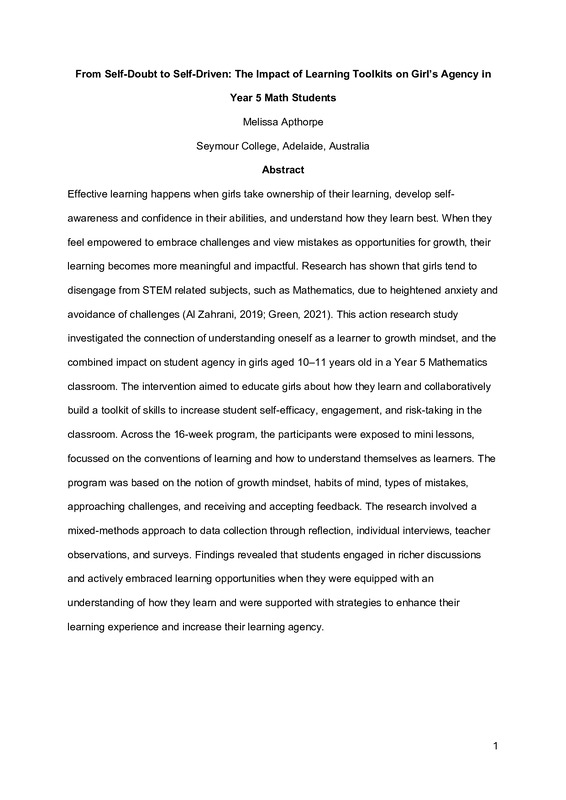
-
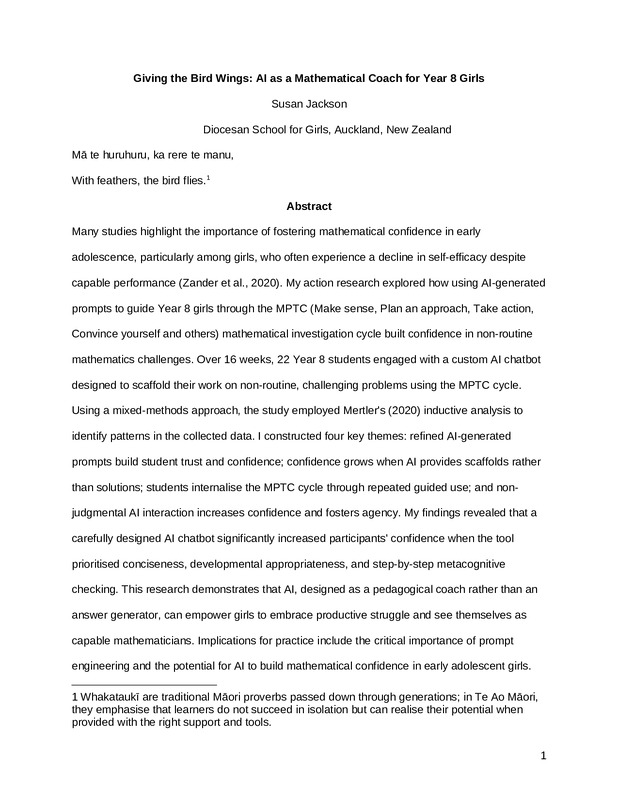 Giving the Bird Wings: AI as a Mathematical Coach for Year 8 GirlsSusan Jackson 2026Many studies highlight the importance of fostering mathematical confidence in early adolescence, particularly among girls, who often experience a decline in self-efficacy despite capable performance (Zander et al., 2020). My action research explored how using AI-generated prompts to guide Year 8 girls through the MPTC (Make sense, Plan an approach, Take action, Convince yourself and others) mathematical investigation cycle built confidence in non-routine mathematics challenges. Over 16 weeks, 22 Year 8 students engaged with a custom AI chatbot designed to scaffold their work on non-routine, challenging problems using the MPTC cycle. Using a mixed-methods approach, the study employed Mertler's (2020) inductive analysis to identify patterns in the collected data. I constructed four key themes: refined AI-generated prompts build student trust and confidence; confidence grows when AI provides scaffolds rather than solutions; students internalise the MPTC cycle through repeated guided use; and non-judgmental AI interaction increases confidence and fosters agency. My findings revealed that a carefully designed AI chatbot significantly increased participants' confidence when the tool prioritised conciseness, developmental appropriateness, and step-by-step metacognitive checking. This research demonstrates that AI, designed as a pedagogical coach rather than an answer generator, can empower girls to embrace productive struggle and see themselves as capable mathematicians. Implications for practice include the critical importance of prompt engineering and the potential for AI to build mathematical confidence in early adolescent girls.
 -
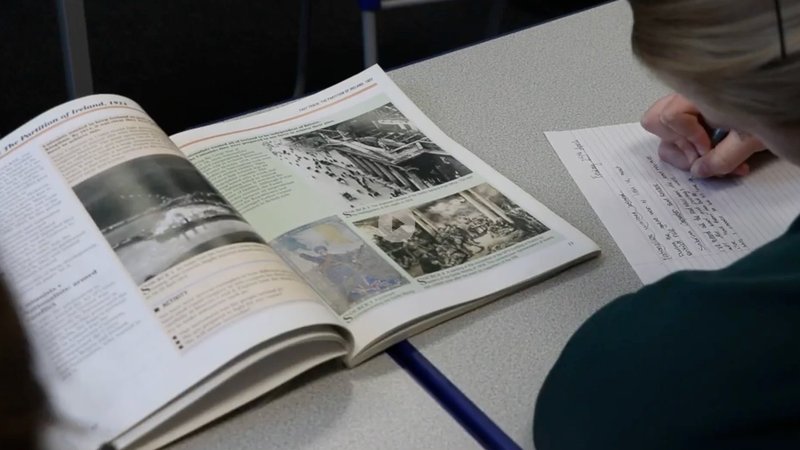 History Belongs to Us: Year 9 Girls Use Historical Significance to Craft Their CurriculumHolly Webb 2025This action research study investigated the impact of applying the skill of historical significance to meaningfully involve girls in the creation of their Year 9 history curriculum. A class of 25 girls was given explicit instruction on evaluating historical significance, and the girls were provided with multiple opportunities to evaluate the significance of the historical topics they were currently studying. The project culminated with students producing independently researched proposals for new topics they believed warranted inclusion in the school's Year 9 history curriculum, and also with the History department working with the students to implement some of these changes. Data collection techniques included questionnaires, focus groups, student work samples, and lesson observations. Thematic analysis was used to interpret the data; findings revealed that involvement in the curriculum design process and application of historical significance enhanced student agency and developed girls’ historical skills. Developing the skill of historical significance also enabled girls to distinguish between the agency of a historian and personal preferences, whilst also highlighting that comprehensive historical knowledge is crucial for students to effectively evaluate significance and exercise agency. The findings from this study are valuable for educators wanting to critically reflect on what may be considered canon in their subject or those hoping to involve students in meaningful curricular change.
 -
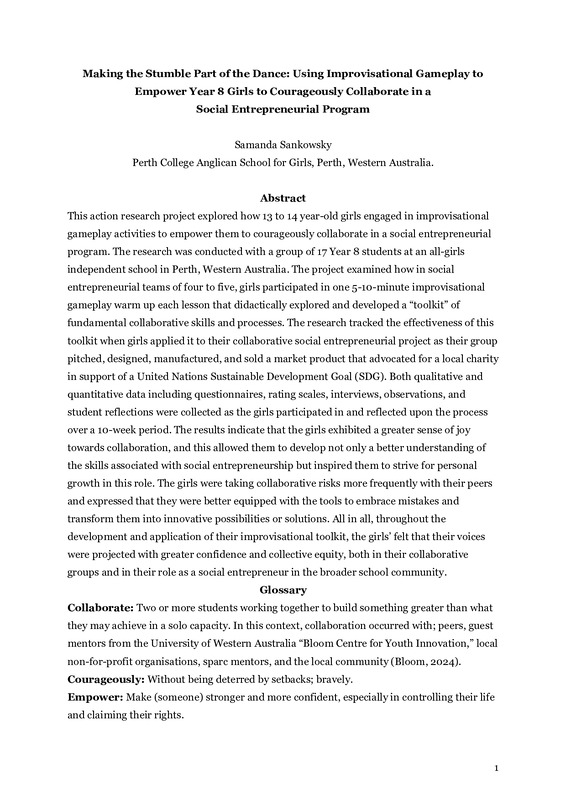 Making the Stumble Part of the Dance: Using Improvisational Gameplay to Empower Year 8 Girls to Courageously Collaborate in a Social Entrepreneurial ProgramSamanda Sankowsky (2024) 2024This action research project explored how 13 to 14 year-old girls engaged in improvisational gameplay activities to empower them to courageously collaborate in a social entrepreneurial program. The research was conducted with a group of 17 Year 8 students at an all-girls independent school in Perth, Western Australia. The project examined how in social entrepreneurial teams of four to five, girls participated in one 5-10-minute improvisational gameplay warm up each lesson that didactically explored and developed a “toolkit” of fundamental collaborative skills and processes. The research tracked the effectiveness of this toolkit when girls applied it to their collaborative social entrepreneurial project as their group pitched, designed, manufactured, and sold a market product that advocated for a local charity in support of a United Nations Sustainable Development Goal (SDG). Both qualitative and quantitative data including questionnaires, rating scales, interviews, observations, and student reflections were collected as the girls participated in and reflected upon the process over a 10-week period. The results indicate that the girls exhibited a greater sense of joy towards collaboration, and this allowed them to develop not only a better understanding of the skills associated with social entrepreneurship but inspired them to strive for personal growth in this role. The girls were taking collaborative risks more frequently with their peers and expressed that they were better equipped with the tools to embrace mistakes and transform them into innovative possibilities or solutions. All in all, throughout the development and application of their improvisational toolkit, the girls’ felt that their voices were projected with greater confidence and collective equity, both in their collaborative groups and in their role as a social entrepreneur in the broader school community.